
AI Strategy Guide · 2026 Edition
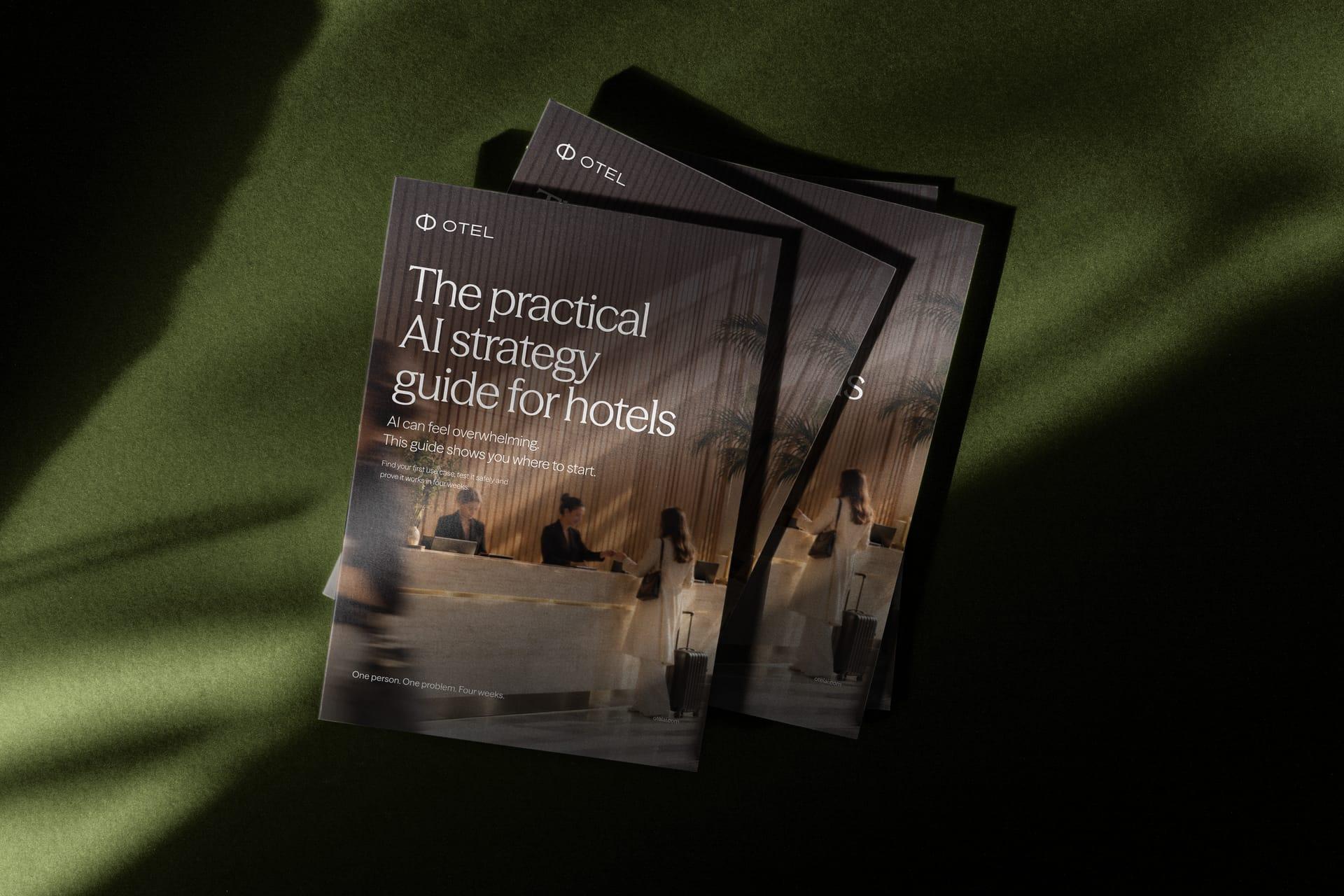
AI can feel overwhelming. This guide shows you where to start.
Find your first use case, test it safely and prove it works in four weeks. Practical tools, operator insight and clearly labelled hotel examples.
Get the full guide.
- Opens instantly
- 10 print-ready templates
- No sales call
Nearly everyone is using AI. Almost nobody has a strategy.
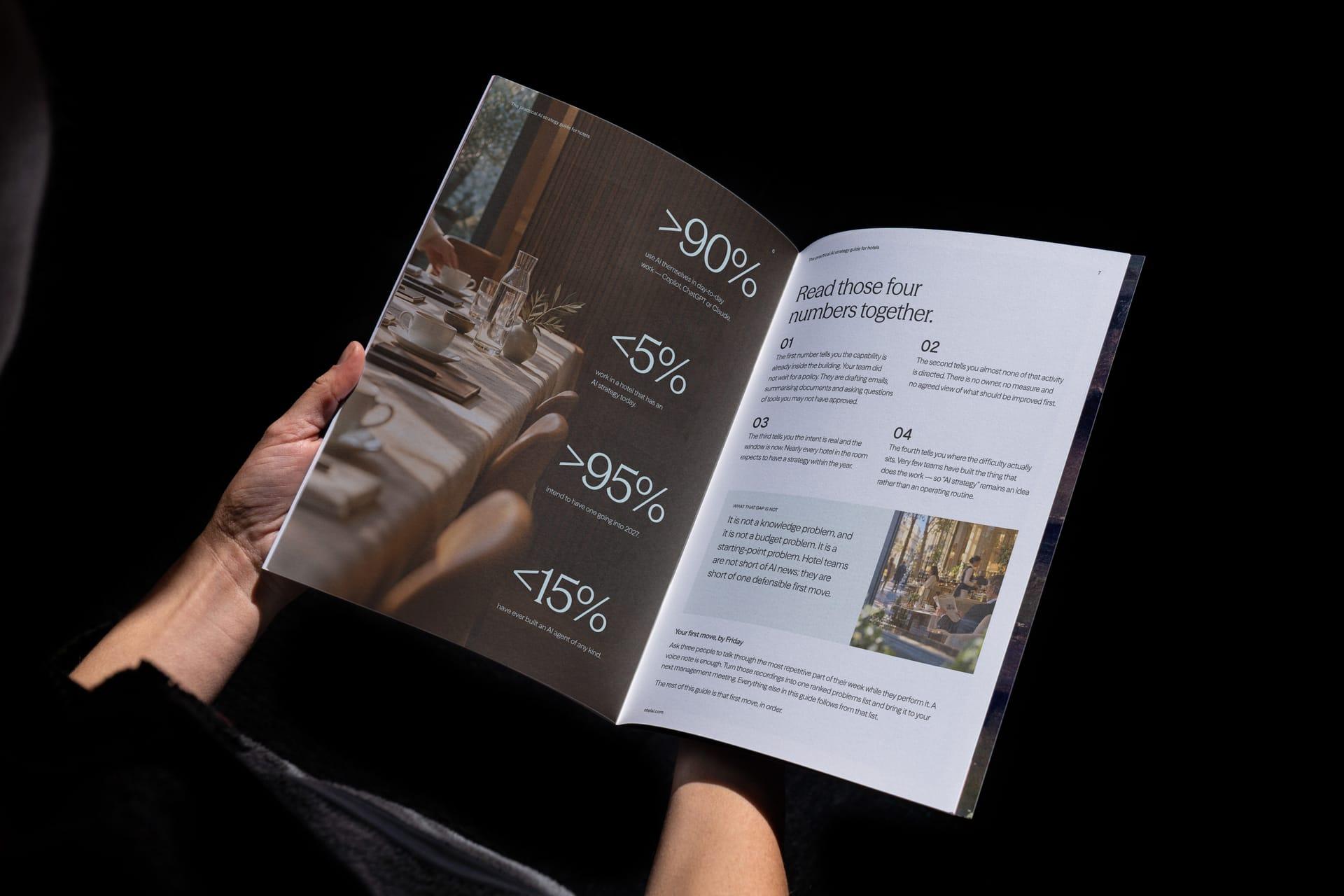
<5%work in a hotel that has an AI strategy today.
We’ve put the same four questions to hotel audiences all year: general managers, owners, revenue leaders, IT directors. The pattern has been the same in every room.
- >90%
- use AI themselves in day-to-day work: Copilot, ChatGPT or Claude.
- >95%
- intend to have one going into 2027.
- <15%
- have ever built an AI agent of any kind.
It is not a knowledge problem, and it is not a budget problem. It is a starting-point problem.
Hotel teams are not short of AI news; they are short of one defensible first move. This guide is that first move.
A practical AI strategy for hotels is not a list of tools. It is a sequence of better-understood work, clearer definitions, controlled tests and measured decisions.
One Irish hotel group ran the exercise in this guide and counted 74 hours a week of repetitive work. Two-thirds of it sat in commercial and finance. They took the single largest line, daily commercial reporting, and treated it as one pilot.
The method they used is in this guide.
What you’ll learn
Understand the opportunity
Four different technologies get called “AI”. They have different strengths, different failure modes, and deserve different amounts of trust.
Find the work
You cannot choose a use case from a product catalogue. You find it by watching people work.
Prove it in four weeks
One problem. One owner. A baseline recorded before you change anything, and a decision date set before you begin.
10 print-ready templates
The toolkit is the second half of the guide. Print it, take it into a management meeting, and complete it against one real workflow.

Book an AI Readiness Session
45 minutes with your GM, revenue lead and whoever signs the budget. You leave with a one-page summary of where the hours go and the first thing to start with.